Medicare Part D, also known as a Prescription Drug Plan (PDP), helps people with Medicare pay for their medication. These plans are purchased from private health insurance providers and come with a variety of benefits and premiums. But for some high-usage Medicare enrollees, they can also come with unexpected expenses, called the Medicare Part D donut hole.
What Is the Medicare Part D Donut Hole?
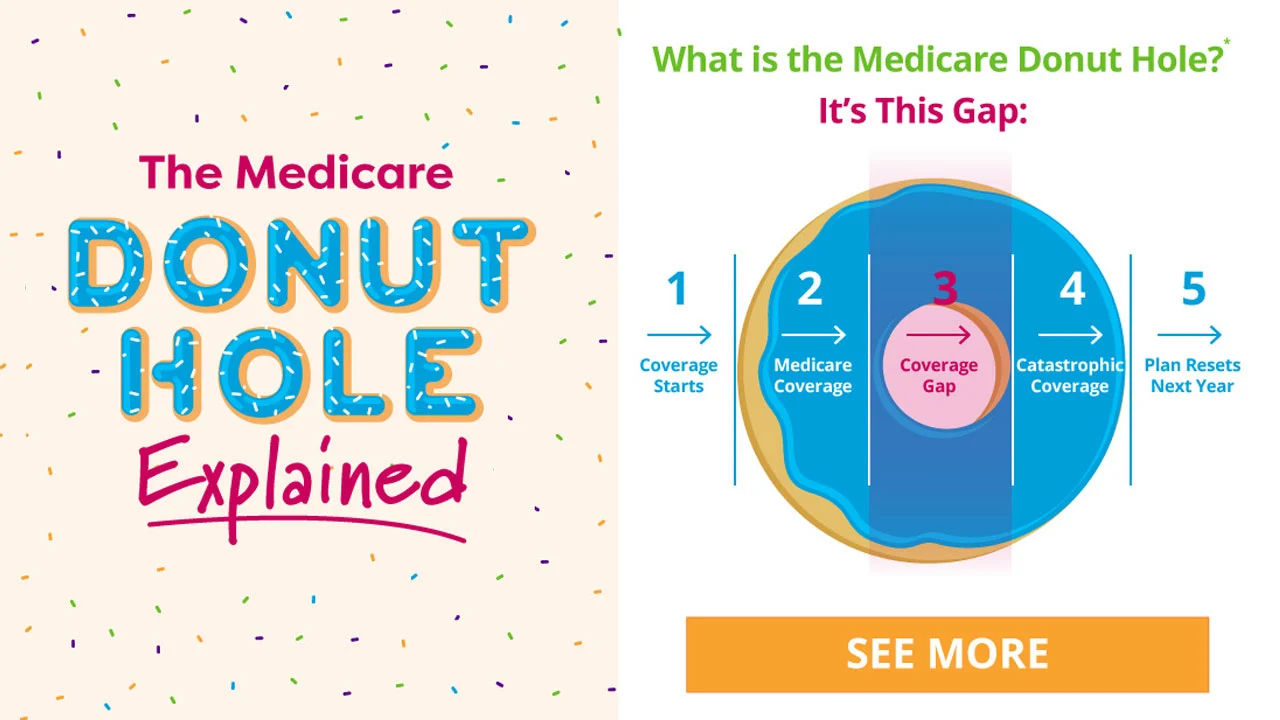
The Medicare Part D donut hole is a temporary coverage gap that could make you pay more for your prescription drugs than you might have expected. Not all people on Medicare reach the donut hole. You first need to spend a set amount in expenses. If you do reach the coverage gap, you are responsible for paying 25% of your covered prescription drug costs out of pocket until you reach a set maximum limit.1
The Medicare Part D donut hole works like this:
- You pay your Part D monthly premiums throughout your plan’s coverage year.
- Before you reach your deductible, you pay all of the cost of your prescription drugs.
- Once you’ve reached your deductible, you’ll only pay a copay or coinsurance for your covered prescription drug costs, leaving the remaining amount for your Part D plan to pay. This is until you’ve reached the coverage limit ($4,430 in 2022).1
- Once the coverage limit has been reached, you will hit the Medicare donut hole. During this time, you will be responsible for no more than 25% of your covered prescription drug costs until you hit the yearly out-of-pocket maximum limit ($7,050 in 2022).2
- When you exceed the yearly out-of-pocket maximum, you will receive what’s called “catastrophic coverage.” This means that you may get your prescription drugs completely covered or at a smaller cost for the remainder of the year.